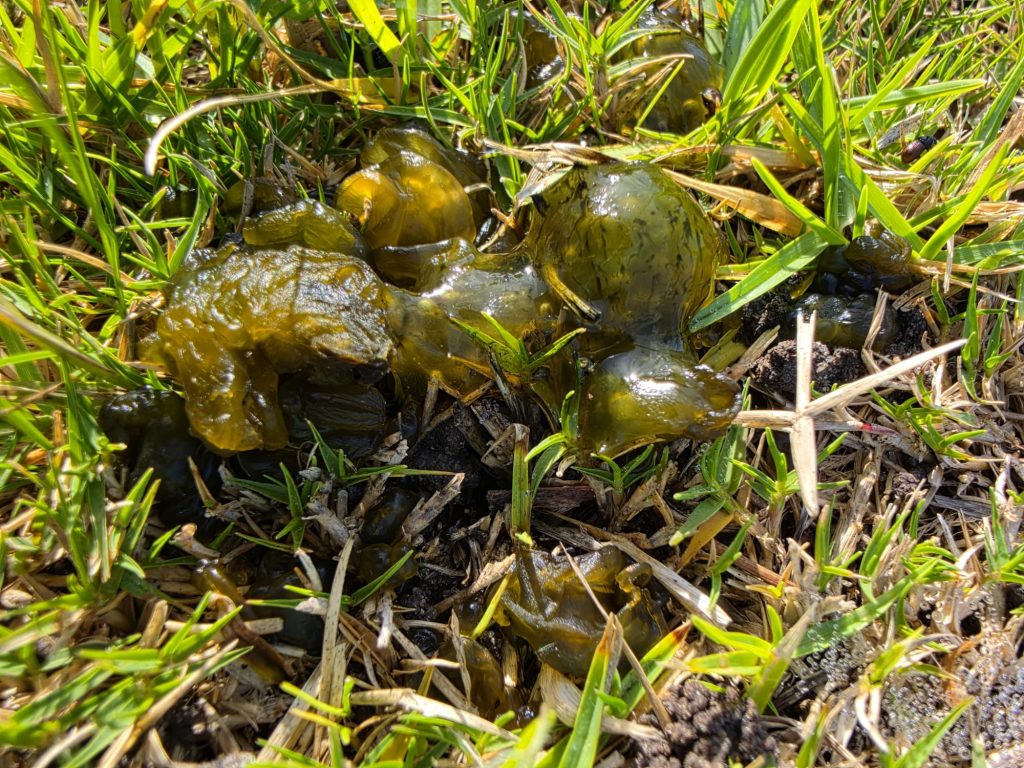
This gooey substance looks disgusting, doesn’t it? But what if I told you it’s a nitrogen-fixing power plant? It may be a gooey mess, but it is one of nature’s miracles.
This green, jelly-like substance is Nostoc, a type of blue-green bacteria similar to algae that often appears after rain in damp, shaded areas. Nostoc pulls nitrogen directly from the air and stores it in its cell walls. Nostoc is a self-sufficient organism capable of nitrogen fixation.
Nostoc is a colony of tiny organisms called cyanobacteria. Unlike most living things, Nostoc can create its own food from sunlight and collect nitrogen from the air. Nitrogen is an essential ingredient for growth, but most plants can’t use nitrogen directly from the air as this gooey substance does. Once Nostoc has captured atmospheric nitrogen, it converts it into forms it can use.
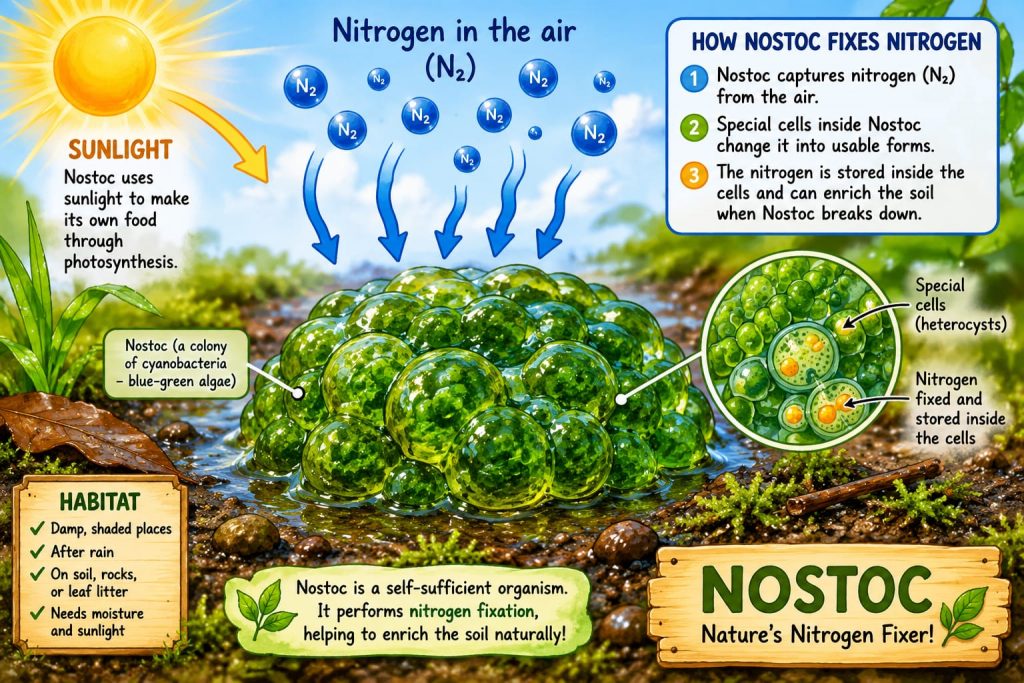
Nitrogen gas floats in the air we breathe, but it must journey through a process known as the Nitrogen Cycle to become available to plants and animals. Did you know that lightening also converts nitrogen gas into a compound like nitrates by mixing it with air? The nitrates fall to the soil with the rain where the plants absorb the fixed nitrogen.
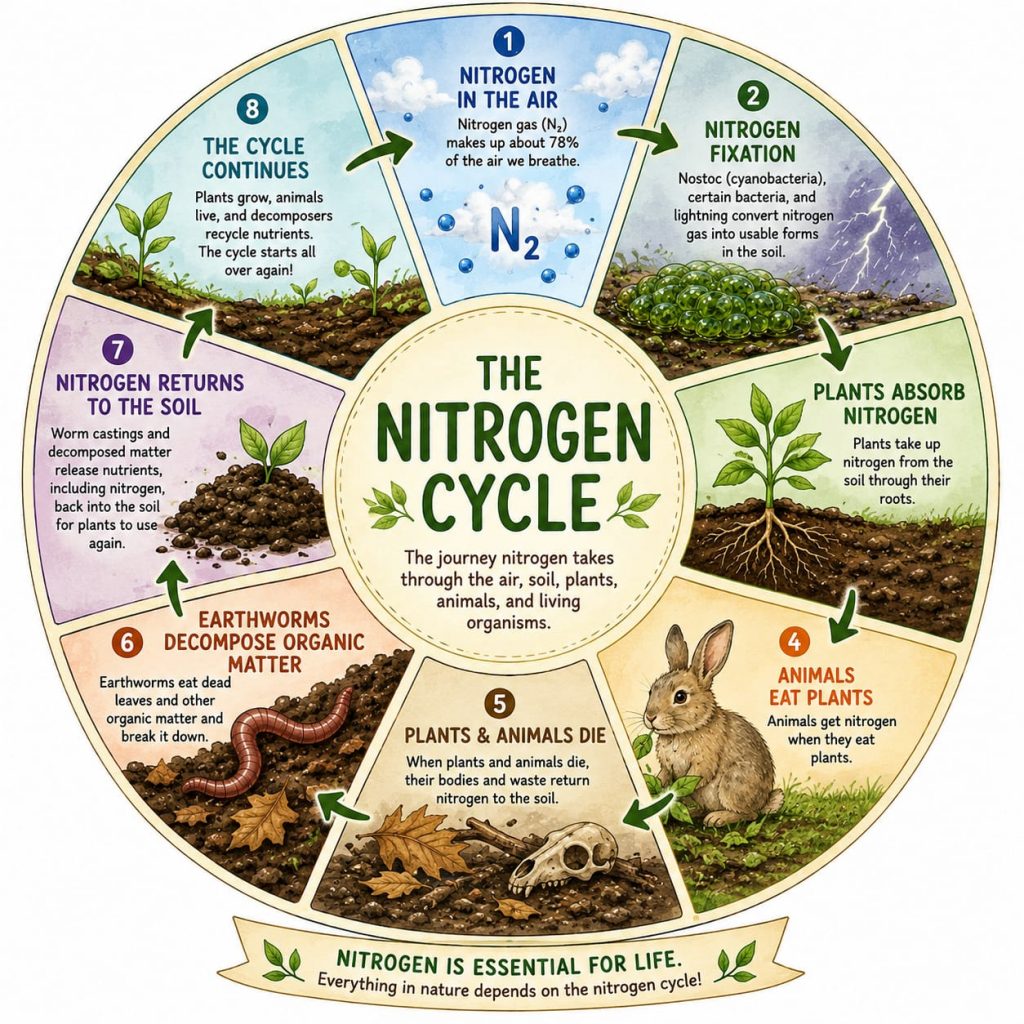
Observe the above image of the Nitrogen Cycle and discuss other ways nitrogen enters the soil. Did you notice that earthworms make nitrogen through eating decomposed matter? Compare how Nostoc and earthworms generate nitrogen with the diagram below.

Activities:
Observe an image of Nostoc and ask:
- What does it look like?
- What does it remind you of?
- Is it a plant, animal, fungus, algae or bacteria?
- Where do you think it lives?
Go on a nature ramble searching for Nostoc.
Materials:
- Nature journal
- Pencil or paints.
- Magnifying glass (optional).
- Collection container (optional). The bacteria can be toxic. If you decide to collect a sample, please do so with an adult, cautiously.
Search areas:
- Damp grasslands/lawns.
- Along walking tracks.
- Shaded garden beds.
- Around rocks.
Observation questions:
- Where was the Nostoc found?
- What colour is it?
- How large is the colony?
- What do you think it would feel like?
- What other plants and organisms are nearby?
Sketching activity:
- Draw the Nostoc in its environment.
- Draw the sun above it and how it captures nitrogen to feed the soil.
- Write your observations.
Younger students can:
Read a picture book about microbes and soil life.
Create a Nostoc model with green jelly and jelly beans.
Older students can research:
- Cyanobacteria
- Photosynthesis
- The Nitrogen Cycle
- Soil Health
- Symbiotic Relationships
- Create a poster titled: ‘How Nostoc Helps the Earth.’
Practice new vocabulary words with the diagram below:

“The smallest organisms often perform the biggest jobs in nature.” Unknown
Isn’t that amazing? I hope you have fun exploring nature for Nostoc.