Welcome to Playful Math Carnival number 185, where we are about to embark on a trip through time and immerse ourselves in the history of mathematics.
“I am sure that no subject loses more than mathematics
by any attempt to dissociate it from its history.”—J. W. L.Glaisher
But before we start our time traveling adventures let’s take a look at what makes 185 so unique!
Numbermatics describes 185 as “an odd composite semiprime number composed of two different prime numbers multiplied together. It has a total of four divisors“
What is an odd composite semiprime you might be asking? Well firstly it’s odd, it can’t be divided by 2. Secondly, it’s composite. It has the factors 5 and 37, because 5 and 37 are both primes and the only factors (other than itself and 1) we give 185 the title Semi-prime or more beautifully 2-almost prime.
It is the sum of three consecutive prime numbers: 59, 61, and 65 and can be expressed as the sum of two squares: 11² + 8², making it a member of the Pythagorean triple (185, 136, 209).
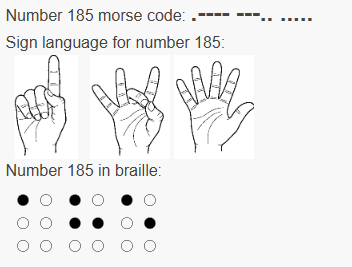
The image above is from Number.Academy
The year 185AD In history…
- Emperor Lo-Yang of China is said to have seen a supernova.
- Commodus, the Gladiator Emperor, confiscates property and destroys Rome’s economy to support his lavish life. He not only hosts the gladiator sports in the arena but participates and boasts of victory in 1,000 matches in the Circus Maximus.
- Zhi Yao first translated Buddhist texts into Chinese
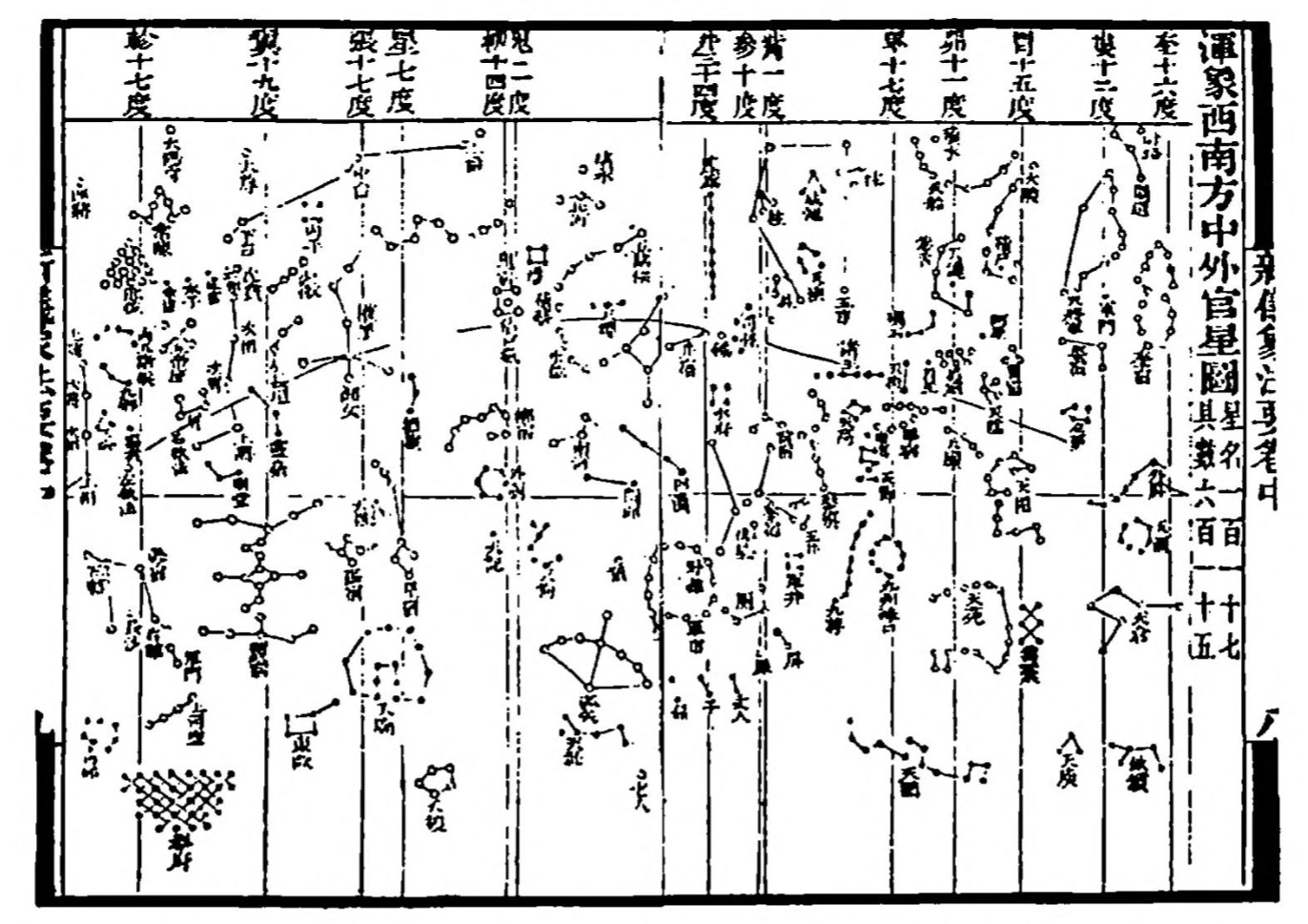
By PericlesofAthens – Joseph Needham,
Science and Civilisation in China: Volume 3,
Mathematics and the Sciences of the Heavens and the Earth (page 277)
Table of Contents
Let’s discover some amazing facts about mathematics throughout history…
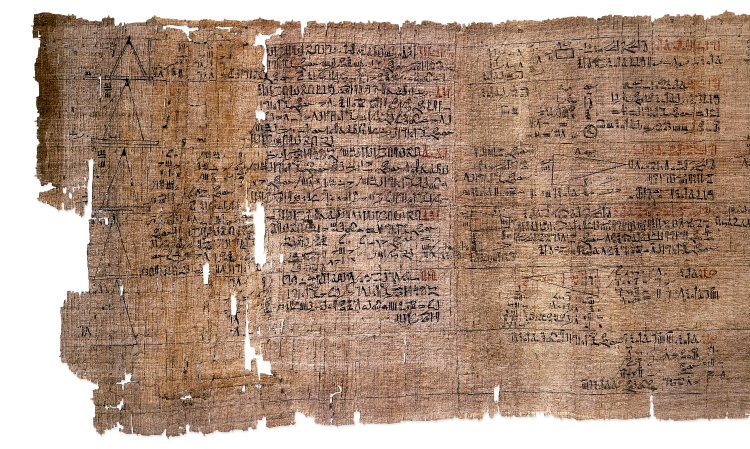
By unknown (c. 2000 B.C) – Ahmes (scribe)
The site called The Story of Mathematics has it all, from the earliest records to 20th Century, it is literally an encyclopedia of information. A great place to research all the things you might have wondered about the history of mathematics.
If you are after a concise overview, this article by MacTutor sums up the progression of mathematical thought in a quick read.
Who doesn’t love a timeline? This simple online Mathematical History Timeline by GetZenQuiry might be a good place to start if you are hoping to create your own.
The Science History institute has a collection of vintage period tables which will have you looking closely at how they were constructed.
Kids can find math history facts here at kiddle.
If you are looking for an easy read MetroMath has a post by Dr Nathaniel Brooks called Exploring the History of Mathematics.
Maybe you are wondering if there is any purpose to studying the history of mathematics at all. I recommend you have a read of Julie Brennans post over at Living Math.
Teaching High School Math also has a post encouraging teachers to inspire their students with math history.
An absolute wealth of incredible artifacts can be seen in this amazing virtual exhibition called the History of Mathematics Project. The site also has links to activities and projects that you can do with your kids, like Balancing Ducks, Frogs and Grasshoppers – Weights and Measures in Ancient Mesopotamia.
NRICH has quite a few links to help you explore and investigate the history of mathematical thinking
A post about the Mayan number system can be found at plus.maths.org
Math is FigureOutAble has series title Figures Who Figured it out. You might like to start with Emmy Noether, one of my favourite math superheroes!
Helping Ada Lovelace with Her Homework is another great post, encourage our students to learn from those who have gone before us. Or the Mathematical Mysteries of Rapa Nui with Classroom Activities. Both are from MMA and have links to activities to do with your students. They also have ideas to link online museum collections with mathematical learning.
If you are curious about a mathematician who lived 250 years ago, has a moon crater with their name and is soon to be engraved on the Eiffel Tower, then you should read this post by ThatsMath.
This project, creating a famous mathematician cube, might be one you would like to consider doing with your students or co-op.
Resources for math history activities…
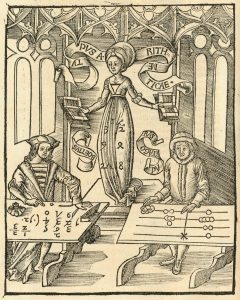
By Gregor Reisch (author) / illustrator unidentified – Houghton Library
TPT has some great free resources for teaching math history, here are some I found
- History of Pi | Timeline | March 14 | Math Lesson | | TPT
- “The Girl with a Mind for Math: The Story of Raye Montague” Lesson Plan freebie
- Financial Literacy: The History of Money by StudioKY | TPT
- Measuring the World – History of STEM Practicals – Circumference of Circles
- Brief History of Geometry with Euclidean vs Non-Euclidean Comparison
- Mathematics – Origin and History of Numbers (Number System) – Algebra
- History of Geometry Research Project by Derive My Pi | TPT
- Story of Maya Numerals – a math story by Montessori Marvels | TPT
- The History and Evolution of the Gregorian Calendar by Philip Polchinski
- The History of Roman Numerals by Meghan Salter | TPT
- History of Computers by Sahaya Lekha | TPT
Twinkl also has some resource worth considering
- History of Maths Timeline
- Famous Mathematicians Posters
- The History of Maths Year 4 Non-Fiction Reading Comprehension
I also found this Free PDF book
The History of Mathematics by Florian Cajori
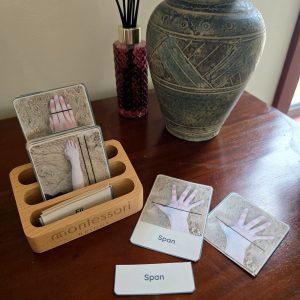
You can download a copy of my Montessori style 3-Part cards on ancient measurement HERE and a copy of the ancient measurement reference chart HERE
Now to the present …
Here are some new math blog posts, to encouraging playful math, that might interest you. They are not in any particular order so grab a cuppa, sit back and flick to whatever takes your fancy!
Understanding the powers of ten is the theme for the latest post by The Beauty of Play.
Scichida Australia writes about Problem solving in Math with Games and Activities for Kids.
Play and Learn encourages us to take our children outdoors for a Spring discovery walk, this can be extended to any time of year. A Winter/Autumn/Summer walk is just beneficial.
“play offers – choice, autonomy, engagement, fun” If you think this might be true but would like some sort of conformation, the article by Math for Love titled Hard data supporting a play-based approach to learning math, might be just what you are looking for. There is also a free math bingo board for you to download.
How Many? by Eary Math Counts introduces us to a book by Christopher Danielson by the same name. After reading the article you might like to jump on over to his web site, Talking Math With Your Kids, and see what is on offer over there.
Illustrative Math tells What Lego Taught Us about Play Based Math.
Find 15 number games to play in 15 minutes or less HERE.
MooMoo Math has a great post full of infographics to help your students make the most of study time.
Five Twelve Thirteen has a post titled Effort -> Learning reminding us that effort leads to learning!
Have ever considered how much is too much? The blog post Too Many Presents helps us grasp the difficulty of how much is too much “My great hope is actually to give students less to play with, so they have time to play with each of them as they go…”
Mr Mathematics helps us to get our head around the surface area of a cylinder and how taking bearings outside Finally helped students understand scale drawings.
Fractal Kitty is my favourite place to go to find math to interest my children as well as challenging enough to keep me investigating and enjoying mathematics. Her offering this year is ‘Inquiries’, the latest post Fence Making..
But It Looked So Good is a glimpse into classroom learning with Jenna Liab and her Grade 3 children’s work with fractions.
Math in the Media gives us the run down on current affairs from a mathematician’s perspective and encourages students to devel into the math with suggested activities.
Denise gives us Charlotte Mason on books over at subtack.
Forever Yours, the faces of infinity is also on substack at reCognize
Joselle’s writing on Pufferfish and Bowerbirds was a great read if you love connections between nature and mathematics like I do!
The last Playful Math Carnival was over at Denise Gaskins’ Let’s Play Math page, go and have a look if you haven’t already and then bookmark it, there is so much to explore!
And just because we all need a little beauty in our lives here is a piece of art created by mathematical artist Hamid Naderi Yeganeh.
I hope you have enjoyed scrolling though this edition of the Playful Math Carnival. If you would like to host a future Carnival, Denise is always looking for will helpers. You can find the details HERE.

Leave a Reply